Call us now :08045802954
 Send Inquiry
 Send Inquiry
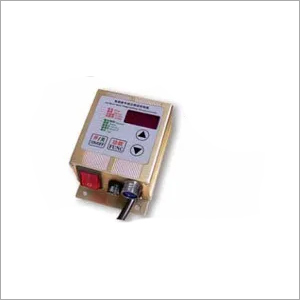
Vibrator Controllers CUH SDVC31-S :1.5A SDVC31-M:3.0A
Price 14750.0 INR/ Piece
MOQ : 1 Piece
Vibrator Controllers CUH SDVC31-S :1.5A SDVC31-M:3.0A Specification
- Product Type
- Vibrator Controller
- Usage & Applications
- Industrial
- Rated Voltage
- 110-220 Volt (V)
- Warranty
- 1 Year
- Phase
- Single Phase
- Display Type
- Nil
- Frequency
- 50-60 Hertz (HZ)
- Control Method
- Phase angle control, stepless adjustment
- Input Voltage
- 110V/220V AC 10%, 50/60 Hz (selectable)
- Display
- Digital display for operation status and parameters
- Housing Material
- ABS Flame retardant plastic
- Model
- SDVC31-S (1.5A), SDVC31-M (3.0A)
- Operating Temperature Range
- -10C to +50C
- Protection Features
- Short circuit, overheat, overcurrent, and overload protection
- Adjustment
- Soft start/soft stop, max/min adjustments, manual amplitude setting
- Output Voltage
- 0~220V AC (stepless adjustable)
- Output Current
- SDVC31-S: Max 1.5A; SDVC31-M: Max 3.0A
Vibrator Controllers CUH SDVC31-S :1.5A SDVC31-M:3.0A Trade Information
- Minimum Order Quantity
- 1 Piece
- Main Domestic Market
- All India
About Vibrator Controllers CUH SDVC31-S :1.5A SDVC31-M:3.0A
Product details
|
Type |
SDVC31-S 1.5A SDVC31-M3.0A |
|
Output Current |
24 V Dc |
|
No of Ports |
2 |
|
Voltage |
260 V |
|
Application |
Industrial |
Automatic Voltage Regulation: Eliminate feed speed variation caused by mains voltage fluctuation.
Soft Startup: in order to avoid sudden shock to the feed material end vibratory feeder. the controller can gently increase output voltage from 0 to the preset value when startup.
Preset Speeds : 4 preset feed speeds can be stored and output by external short-circuit signal.
Remote ON/OFF Control: Each stde of the conttoller has 2 groups of ON/OFF control pins. Switch sensor or PLC can be connected to them to turn on/off the controller.
Photoelectric ON/OFF Control: The CUH Intelligent Photoelectric Sensor can be connected to tum on/off the controller.
Remote Speed Control: Output Voltage of the controller can be adjusted remotely by an external polentiometer, a PLC. or a 1-5V DC signal.
DC Control Output: The controller can output low voltage DC power associated with logical relation setting of the ON/OFF Control to drive a solenoid.
an electrical relay or other external devices.
Overheat Protection: if internal temperature of the controller gets too high. the conttoller will stop its output to protect itself.
Over current Protection: If output current exceeds its rated value by misoperation.the controller will stop its output to protect the controller and vibratory feeder.
Short -Circuit Protection: If output of the controller is short-circuited, the fuse inside the controller will be blown to protect the controller and vibratory feeder from further damage.
Advanced Amplitude Control for Vibratory Feeders
The SDVC31 series controllers provide seamless amplitude regulation for vibratory feeders, allowing precise adjustment via stepless voltage control. This ensures stable operation, consistent material flow, and easy tuning for different feeder applications in industrial automation environments.
Designed for Safety and Reliability
Equipped with short circuit, overheat, overcurrent, and overload protection, the SDVC31-S and SDVC31-M safeguard both your equipment and processes. The digital display helps users monitor operation status and parameter settings, reducing downtime and promoting safe usage.
User-Friendly Installation and Operation
Featuring screw terminal blocks for straightforward connection, manual amplitude adjustment, and selectable input voltages, these controllers are easy to integrate into new or existing setups. Their compact design and flame-retardant casing also enhance installation flexibility and user safety.
FAQ's of Vibrator Controllers CUH SDVC31-S :1.5A SDVC31-M:3.0A:
Q: How do I select the appropriate model between SDVC31-S and SDVC31-M for my application?
A: Choose the SDVC31-S if your vibratory feeder requires an output current of up to 1.5A. For applications demanding higher currents (up to 3.0A), select the SDVC31-M. Assess your feeder's current requirements before choosing.Q: What is the process for adjusting vibration amplitude with the SDVC31 controllers?
A: The controllers support stepless amplitude adjustment via phase angle control. Use the digital display and manual adjustment settings to set your desired output voltage (0-220V AC), fine-tuning performance for optimal material flow.Q: Where can these vibrator controllers be installed?
A: SDVC31 controllers are suitable for industrial environments requiring controlled feeding or sorting, such as manufacturing lines or assembly processes. Ensure placement in a location that stays within the operating temperature range of -10C to +50C.Q: What protection features do these controllers offer to ensure safe operation?
A: Both models include built-in protections against short circuits, overheating, overcurrent, and overload. These safeguards help minimize the risk of damage to the controller and connected feeder devices.Q: When should I use the soft start and soft stop features?
A: Soft start and soft stop functions are beneficial during power-on or shutdown routines. They gradually ramp the feeder's amplitude to prevent mechanical shock, extending feeder life and maintaining consistent performance.Q: How is electrical connection achieved for these controllers?
A: Both input and output connections utilize sturdy screw terminal blocks, ensuring secure wiring and straightforward installation in any compatible vibratory feeder system.Q: What benefits does the digital display provide during usage?
A: The digital display allows real-time monitoring of operation status and parameter settings, simplifying setup and troubleshooting, and enhancing the overall user experience with accurate feedback.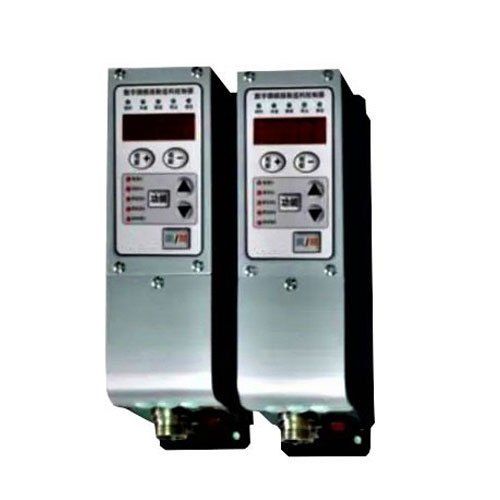
Tell us about your requirement

Price:
Quantity
Select Unit
- 50
- 100
- 200
- 250
- 500
- 1000+
Additional detail
Mobile number
Email

More Products in Vibrator Controllers CUH Category
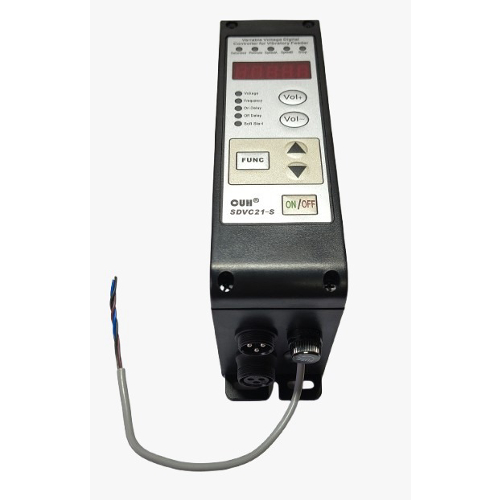
Vibrator Controller SDVC-21S
Price 2500.0 INR / Unit
Minimum Order Quantity : 1 Unit
Warranty : 1 Year
SDVC20-L: 10A
Price 1 INR / Pair
Minimum Order Quantity : 1 Pair
Warranty : 1 year
Rated Voltage : 85440 V Volt (V)
Frequency (MHz) : 5060 Hz Hertz (HZ)
Energy Consumption : 1.53W Energy
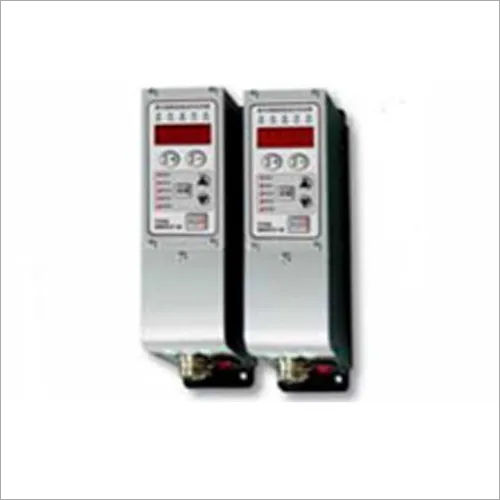
SDVC31-S :1.5A / SDVC31-M:3.0A
Warranty : 1 year
Rated Voltage : 85 260 V Volt (V)
Frequency (MHz) : 40 400 Hz Hertz (HZ)
Energy Consumption : 1.5 3 W Energy
SDVC20- S
Price 1 INR / Pair
Minimum Order Quantity : 1 Piece
Warranty : 1 year
Rated Voltage : 85260 Volt (V)
Frequency (MHz) : 50100 Hz Hertz (HZ)
Energy Consumption : 1.53W Energy

 Send Inquiry
Our Products


Gala No. F-27, 28, 39 & 40, Sanghavi Steel Compound, Cts No- 4681, Mohan Nagar, Chinchwad,Pune - 411019, Maharashtra, India

Mr Chandrakant N. Patil
(Proprietor)
Mobile :08045802954
 Send Inquiry
 Send SMS
Developed and Managed by Infocom Network Private Limited.


